
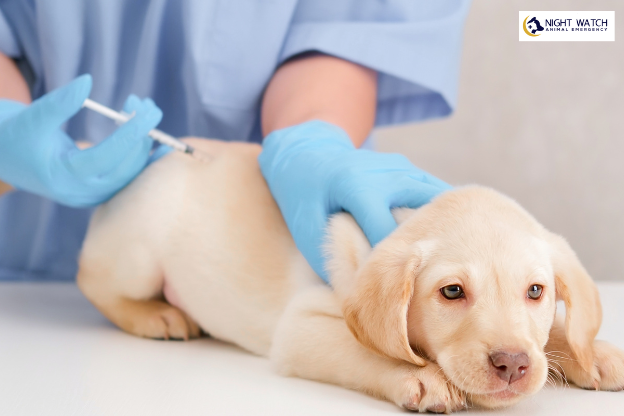
Your puppy needs a series of vaccinations, deworming, and preventive care during their first year to build strong immunity, protect against deadly diseases, and help them thrive. Core vaccines like the DA2PP vaccine series and the rabies vaccine for puppies are essential, while lifestyle-based vaccines such as leptospirosis and bordetella vaccines may be recommended based on your pup’s exposures.
A proper puppy vaccination schedule also includes regular deworming and fecal tests to guard against internal parasites, all part of a well-rounded preventive care plan that keeps your pet healthy. At Night Watch Elite Animal Emergency, we understand how crucial this first year is for lifelong health, and we’re here to guide you every step of the way.
Table of Contents
ToggleWhat Vaccines Does My Puppy Need in the First Year?
Puppy’s first year vaccines are divided into two categories:
Core (Required) Vaccines
These protect against serious, widespread diseases and are recommended for all puppies.
- DAPP vaccine (Distemper, Adenovirus, Parvovirus, Parainfluenza)
- Rabies vaccine for puppies (required by Texas law)
Optional / Lifestyle-Based Vaccines
These depend on your puppy’s exposure risk, environment, and lifestyle.
- Leptospirosis vaccine
- Bordetella vaccine (Kennel cough)
Your veterinarian determines which non-core vaccines are appropriate based on your puppy’s environment, such as daycare attendance, boarding, wildlife exposure, or outdoor water sources.
What Is the Recommended Puppy Vaccination Schedule?
The exact schedule varies slightly by veterinarian and your puppy’s individual health, but a general timeline looks like this:
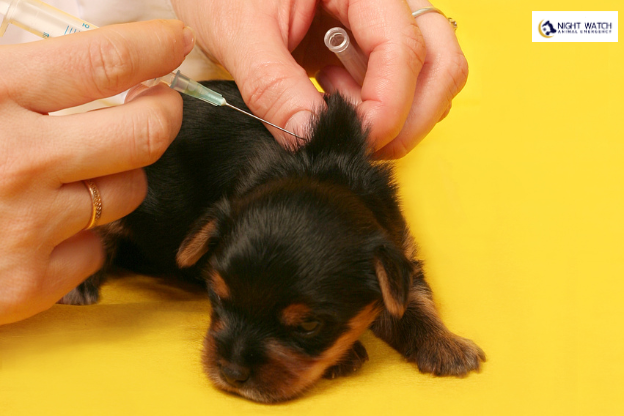
6–8 Weeks
- First DAPP vaccine
- Initial deworming (if not already done)
- Fecal test for puppies
10–12 Weeks
- DAPP booster
- Possible start of Bordetella vaccine (if needed)
- Consider the leptospirosis vaccine depending on risk
- Repeat deworming
14–16 Weeks
- Final DAPP booster
- Rabies vaccine for puppies (REQUIRED in Texas by 16 weeks)
- Booster the leptospirosis vaccine
12–16 Months
- Booster vaccines (DA2PP + Rabies)
- Booster lepto and bordetella if elected
- Continued parasite prevention
- Routine fecal screening
Why Is the Rabies Vaccine So Important in Texas?
Texas law requires the rabies vaccine for puppies by 16 weeks of age. Rabies is a fatal viral disease that can spread to humans and other animals. Vaccination protects:- Your puppy
- Your family
- Your community
What Does the DA2PP Vaccine Protect Against?
The DAPP protects against:.- Distemper – A highly contagious viral disease affecting the respiratory and neurological systems
- Adenovirus (Hepatitis) –Causes liver damage
- Parvovirus – Severe gastrointestinal disease, often fatal in puppies
- Parainfluenza –Respiratory infection
Does My Puppy Need the Leptospirosis Vaccine?
Leptospirosis is considered lifestyle-based but is increasingly recommended in Texas.
Leptospirosis spreads through:
- Standing water
- Wildlife urine
- Contaminated soil
It can cause kidney and liver failure, and it is zoonotic, meaning humans can contract it. If your puppy spends time outdoors, near wildlife, or in wet environments, your veterinarian may recommend this vaccine.
What Is the Bordetella Vaccine?
The Bordetella protects against kennel cough, a highly contagious respiratory disease.
It is typically recommended for puppies who:
- Attend daycare
- Visit the boarding facilities
- Socialize frequently at dog parks
- Participate in training classes
While not required for all dogs, many facilities require proof of bordetella vaccination.
Puppy Deworming & Parasite Prevention
Vaccines aren’t the only priority in your puppy’s first year. Internal parasites are extremely common in young dogs.
Why Is Puppy Deworming Necessary?
Puppies often acquire parasites from:
- Their mother before birth
- Nursing
- The environment
Common parasites include:
- Roundworms
- Hookworms
- Whipworms
- Giardia
These can cause:
- Diarrhea
- Weight loss
- Poor growth
- Anemia
Some parasites can also infect humans.
What Is a Fecal Test for Puppies?
A fecal test for puppies examines stool under a microscope to identify parasite eggs or organisms. Veterinarians recommend:- Early fecal testing during puppy visits
- Repeat testing as directed
- Ongoing parasite monitoring during the first year
What Happens If My Puppy Has a Vaccine Reaction?
Most puppies tolerate vaccines well. Mild effects may include:- Sleepiness
- Mild soreness
- Temporary appetite decrease
- Facial swelling
- Vomiting or diarrhea
- Difficulty breathing
- Collapse
When Are Diagnostics Like Blood Tests Needed?
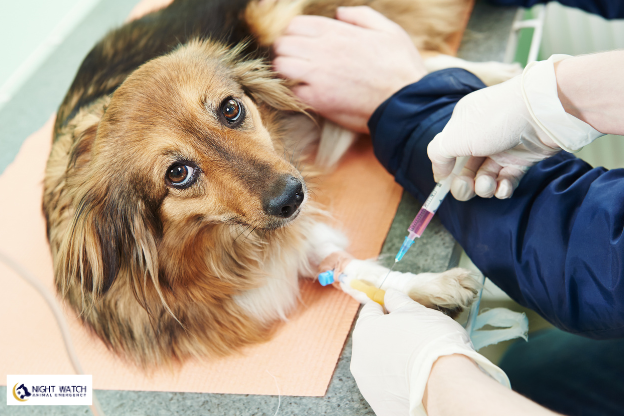
While routine vaccines and deworming are preventive, certain situations may require deeper diagnostics.
A veterinarian may recommend pet blood tests San Antonio if your puppy:
- Shows persistent illness after vaccination
- Has abnormal growth patterns
- Displays signs of infection
- Requires pre-anesthetic screening
Blood work helps assess organ function and detect underlying health concerns early.
How Night Watch Elite Animal Emergency Supports Your Puppy
At Night Watch Elite Animal Emergency in San Antonio, we primarily provide after-hours and emergency veterinary care. However, we also offer wellness services when your primary veterinarian is unavailable.This means pet parents can access:
- Vaccination services
- Preventive care guidance
- Parasite testing
- Emergency support for adverse reactions
- Diagnostic testing when needed
If your puppy becomes ill after routine care or if you have urgent concerns, our emergency team is here to help.
First-Year Puppy Care Checklist
Here’s a simple framework to follow:- Complete the full vaccination schedule
- Administer rabies vaccine by 16 weeks (Texas requirement)
- Discuss leptospirosis and bordetella vaccines with your vet
- Follow a structured puppy deworming plan
- Perform routine fecal testing
- Monitor for vaccine reactions
- Seek emergency care if serious symptoms occur
Frequently Asked Questions
How many rounds of vaccines does a puppy need?
Can I delay the rabies vaccine?
Is deworming necessary if my puppy stays indoors?
Are optional vaccines really optional?
Final Thoughts
Your puppy’s first year is a critical window for immune development and disease prevention. A carefully followed puppy vaccination schedule, timely rabies vaccine, targeted use of DA2PP, leptospirosis, and bordetella vaccines, and consistent puppy deworming with fecal testing create a strong foundation for lifelong health.