
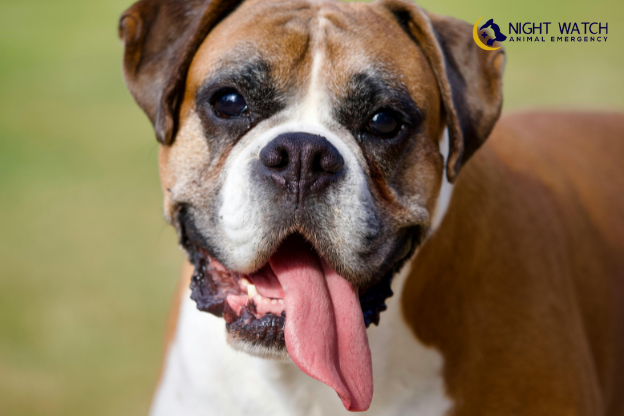
Excessive panting at night in dogs is most commonly caused by heat, anxiety, pain, respiratory issues, or underlying medical emergencies. While some causes are mild, persistent or sudden nighttime panting can signal a condition that requires immediate evaluation by an emergency vet in San Antonio.
Nighttime symptoms often worry pet owners because dogs should be resting, not struggling to breathe or settle. If your dog is panting heavily after bedtime, especially when paired with restlessness or rapid breathing in pets, this guide will help you understand why it’s happening, when it’s serious, and when to seek emergency care.
Table of Contents
ToggleWhat Does Excessive Panting in Dogs Mean?
A dog’s excessive panting goes beyond normal temperature regulation or post-exercise cooling. It often reflects physical stress, discomfort, or illness.
Common signs of abnormal panting include:
- Heavy, fast, or loud breathing while resting
- Panting that wakes your dog from sleep
- Panting paired with pacing, trembling, or whining
- Rapid breathing in pets without heat or exertion
Why Is My Dog Panting Excessively at Night?
Nighttime panting is especially concerning because symptoms often intensify when distractions fade, and pain or breathing issues become more noticeable.
1. Is My Dog Panting at Night Because of Heat?
Dogs do not sweat like humans and rely on panting to cool themselves.
Nighttime heat-related triggers include:
- Warm Texas evenings with poor airflow
- Sleeping in enclosed or poorly ventilated spaces
- Thick coats or brachycephalic (short-nosed) breeds
- Dehydration after a hot day
If panting eases with cooling and hydration, heat may be the cause, but persistent symptoms are not normal.
2. Can Anxiety Cause Nighttime Panting in Dogs?
Yes. Anxiety is one of the most common non-medical causes of nighttime panting.
Common anxiety triggers include:
- Separation anxiety when owners go to bed
- Noise sensitivity (traffic, storms, fireworks)
- Cognitive decline in senior dogs
- Changes in routine or environment
Anxious panting is often paired with pacing, hiding, or excessive alertness.
3. Is Pain a Reason My Dog Pants More at Night?
Pain often worsens at night when dogs are less distracted.
Pain-related causes include:
- Arthritis or joint disease
- Dental pain or infections
- Abdominal discomfort
- Recent injuries or surgery
Pain-induced panting is a red flag, especially if your dog struggles to lie down or seems restless.
4. Could My Dog’s Panting Be a Breathing or Heart Problem?
Yes, and this is one of the most serious possibilities.
Medical conditions linked to excessive panting include:
- Heart disease or heart failure
- Lung disease or pneumonia
- Tracheal collapse
- Asthma-like airway inflammation
If panting is paired with rapid breathing in pets, coughing, blue gums, or weakness, seek care at an animal hospital in San Antonio immediately.
5. Can Hormonal or Metabolic Issues Cause Excessive Panting?
Certain systemic illnesses cause persistent panting regardless of the time of day.
Examples include:
- Cushing’s disease
- Fever or infection
- Anemia
- Internal bleeding
These conditions often worsen at night and require urgent diagnostic testing.
When Is Nighttime Panting an Emergency?
Some symptoms mean you should not wait until morning.
Seek an Emergency Vet in San Antonio If Your Dog Has:
- Panting that starts suddenly and won’t stop
- Rapid or labored breathing at rest
- Pale, blue, or gray gums
- Collapse, weakness, or disorientation
- Panting with vomiting or abdominal swelling
These signs can indicate life-threatening conditions requiring immediate care.
How Is Excessive Panting Diagnosed?
Veterinary evaluation focuses on identifying whether the cause is behavioral, environmental, or medical.
At Night Watch Elite Animal Emergency, evaluation may include:
- Physical and respiratory examination
- Oxygen level assessment
- Chest X-rays
- Bloodwork
- Pain and neurological assessment
Early diagnosis significantly improves outcomes.
What Can I Do at Home Right Now?
If your dog is stable but panting:
Immediate supportive steps include:
- Move your dog to a cool, quiet area
- Offer fresh water (do not force drinking)
- Reduce stimulation and noise
- Observe breathing rate while resting
If panting persists beyond 30–60 minutes, worsens, or includes distress, go to an emergency vet.
How Can Night Watch Elite Animal Emergency Help?
Why pet owners trust Nightwatch:
- Emergency-trained veterinary team
- Advanced diagnostics available overnight
- Immediate triage for breathing emergencies
- Compassionate, pet-focused care
Frequently Asked Questions (FAQ)
Here are some answers to the questions that most pet parents worry about:
Is it normal for dogs to pant while sleeping?
No. Light breathing is normal, but heavy panting during sleep is not.
Can stress alone cause excessive panting?
Yes, but stress-related panting should resolve once the trigger is removed.
Should I wait until morning if my dog is panting?
No, nighttime panting with distress should be evaluated immediately.
Is rapid breathing in pets always an emergency?
At rest, yes. Rapid breathing is a key warning sign.
Key Takeaways for Pet Owners
- Excessive nighttime panting is not normal
- Causes range from heat and anxiety to serious medical emergencies
- Rapid breathing in pets is a critical warning sign
- Early evaluation saves lives
If your dog is panting excessively at night, trust your instincts and seek emergency care.
Conclusion: Don’t Ignore Excessive Panting at Night
Your dog’s excessive panting at night is your pet’s way of telling you something isn’t right. While heat or anxiety can sometimes explain mild symptoms, persistent or sudden panting often points to pain, breathing trouble, or a medical emergency. Dogs should rest comfortably at night, not struggle to breathe. Acting early and getting a professional evaluation can prevent serious complications and, in many cases, save your dog’s life.
When Your Dog Needs Help Tonight, We’re Here
If your dog is panting excessively at night, breathing rapidly, or seems distressed, don’t wait until morning. Visit Night Watch Elite Animal Emergency for immediate care from an experienced emergency vet in San Antonio. Our team is available overnight to assess breathing issues, manage pain, and provide urgent treatment when your pet needs it most.