
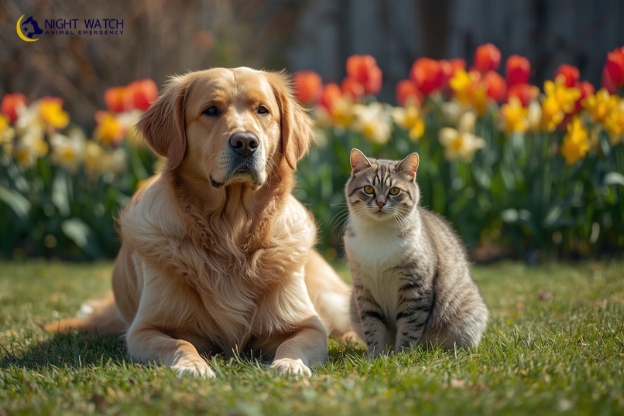
Spring in South Texas means blooming flowers, Easter bouquets, and fresh landscaping. While the season brings beautiful colors and fresh growth, it can also introduce hidden dangers for pets.
Many of the plants that make homes and gardens look beautiful can actually be dangerous or even deadly for dogs and cats.
Each year, veterinary clinics see a spike in plant-related poisonings as families bring home seasonal flowers or plant new gardens.
Many common spring flowers such as lilies, tulips, daffodils, and sago palms can be toxic to dogs and cats. Veterinary clinics in South Texas often see an increase in pet poisoning cases during spring as households bring home seasonal flowers and plant new gardens.
Table of Contents
ToggleCommon Spring Flowers That Are Toxic to Pets
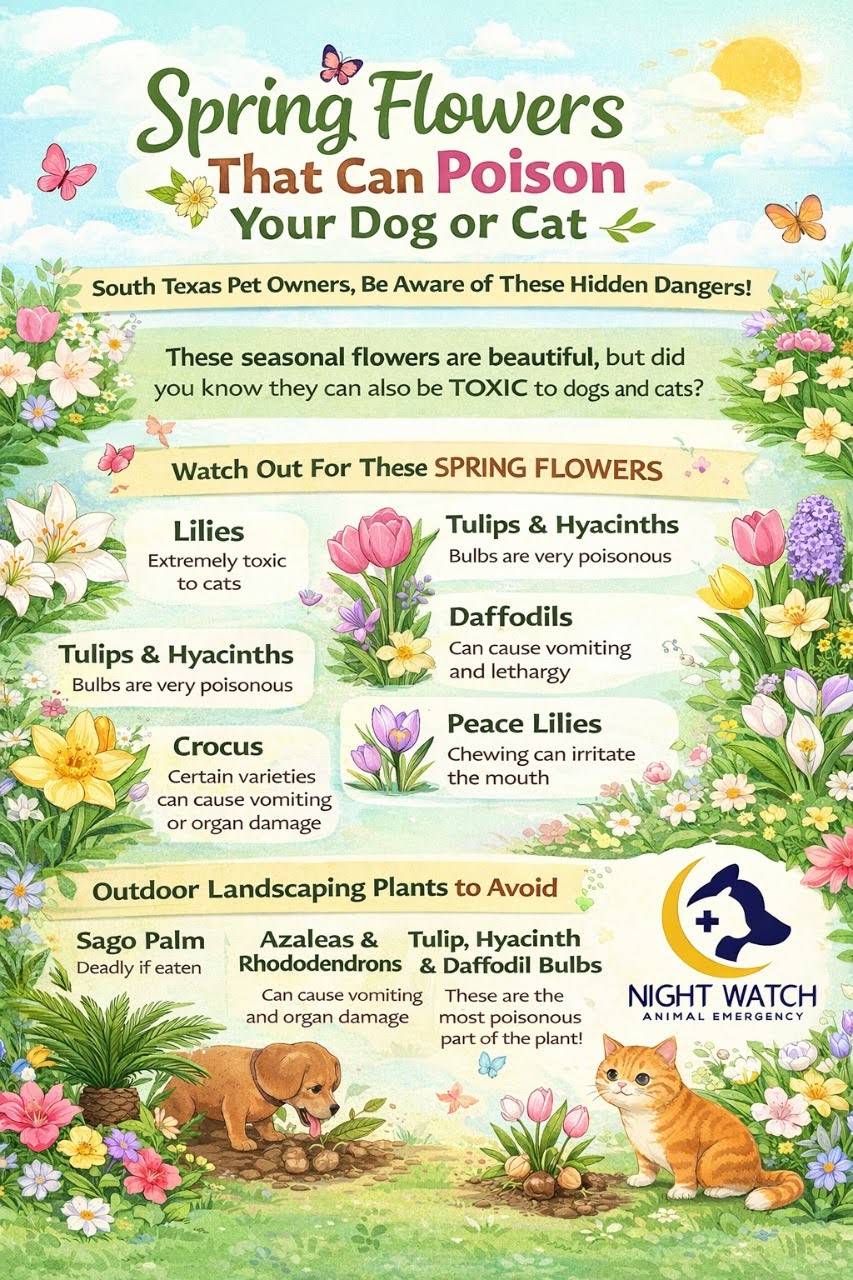
When bringing home flowers or receiving bouquets during the spring season, it is important to know which plants may pose a risk to pets.
Lilies
Lilies are extremely dangerous, especially for cats. Even a small exposure can cause severe kidney failure and can be life-threatening.
Tulips & Hyacinths
The bulbs of these plants contain concentrated toxins. If eaten, pets may experience:
- Drooling
- Vomiting
- Diarrhea
Daffodils
Daffodils contain a toxin called lycorine, which can trigger:
- Vomiting
- Abdominal pain
- Heart rhythm problems
Crocus
Certain types of crocus plants can cause gastrointestinal irritation and potential organ damage if ingested.
Peace Lilies
Peace lilies can cause painful irritation in the mouth and throat, along with excessive drooling if pets chew on them.
Even the water inside a flower vase containing toxic plants can be harmful, so pets should never drink from it.
Outdoor Plants That Can Harm Pets
Spring gardening can also introduce outdoor risks. Some ornamental plants commonly used in landscaping in warmer climates are extremely toxic to pets.
Be cautious when planting the following:
Sago Palm
Sago palm is considered one of the most dangerous plants for pets. Even small amounts can cause severe liver failure and death.
Azaleas and Rhododendrons
These plants contain toxins that affect the heart and nervous system, causing symptoms such as:
- Vomiting
- Weakness
- Serious health complications
Tulips, Hyacinths, and Daffodils
When planted outdoors, these flowers grow from bulbs that contain the highest concentration of toxins.
Dogs are particularly at risk because many enjoy digging in newly planted garden beds, where the toxic bulbs are buried.
Even small amounts can lead to:
- Stomach upset
- Drooling
- Vomiting
- More serious complications
Symptoms of Plant Poisoning in Pets
If a dog or cat ingests a toxic plant, symptoms may include:
- Drooling
- Vomiting or diarrhea
- Lethargy
- Pawing at the mouth
- Tremors or weakness
Some toxins cause delayed internal damage, so any suspected plant ingestion should always be treated as a veterinary emergency.
How to Protect Your Pets This Spring
Spring should be a joyful season—not a trip to the emergency vet. A few simple precautions can help protect your pets.
- Research plants before bringing them home
- Keep bouquets and Easter lilies out of reach
- Choose pet-safe landscaping plants
- Supervise pets when they are outside in the garden
- Avoid planting toxic bulbs in areas where pets dig
When to Call a Veterinarian
If your pet chews or ingests a plant or bulb, contact a veterinarian immediately.
Night Watch Animal Emergency provides overnight emergency veterinary care and is available for pet owners who need a pet hospital san antonio or a trusted emergency vet surgery during nighttime emergencies.
They are available Thursday through Monday nights from 6 PM to 8 AM.
📞 Phone: (210) 455-4559
🌐 Website: www.nightwatchanimalemergency.com
Frequently Asked Questions
What spring flowers are toxic to dogs and cats?
Some of the most toxic spring flowers include lilies, tulips, hyacinths, daffodils, crocus, and peace lilies. These plants contain toxins that can cause digestive issues, organ damage, or more serious health problems in pets.
Why are lilies dangerous for cats?
Lilies are extremely toxic to cats. Even small exposure, such as licking pollen or drinking water from a vase with lilies, can cause severe kidney failure.
What should I do if my pet eats a toxic plant?
Are tulip bulbs more toxic than the flowers?
How can I make my garden safer for pets?
You can make your garden pet-safe by researching plants before planting, avoiding toxic flowers, using pet-safe landscaping, and supervising pets when they explore outdoor areas.